

2026/06/23
From a systems engineering perspective, the production line follows a progressive flow—from coarse to fine, from mixed to separated—covering these core stages:
Pretreatment & Feeding
Baled textile waste is first broken apart and fed evenly onto a conveyor belt. This stage is equipped with metal detection and removal devices to protect downstream cutters from hard objects like buttons and zippers.
Coarse Shredding
A twin-shaft or single-shaft shredder tears the bulky fabric into strips approximately 30–150 mm wide. These machines feature low-speed, high-torque designs with strong anti-wrapping capabilities, ensuring stable processing of tough, high-tenacity materials.
Fine Pulverization or Opening
This is the critical branching point that determines downstream applications:
For mechanical recycling (spinning): An opener machine uses multiple high-speed tines to gently tease the material into fluffy reclaimed fibers. The primary objective is to preserve fiber length (typically ≥15 mm), as length directly determines the spinnability and strength of recycled yarn. Research indicates that advanced opening configurations—such as multi-roller designs—deliver significantly better fiber quality than simply increasing the number of opening passages.
For chemical recycling (feedstock preparation): A high-speed refiner cuts the material into uniform millimeter-sized fragments (e.g., 10 mm × 10 mm) to maximize specific surface area, facilitating subsequent chemical reactions such as acidolysis or alcoholysis.
Air Classification & Dust Removal
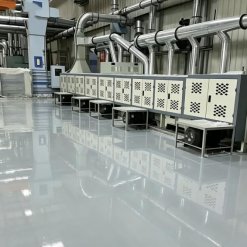
Airflow and negative-pressure systems separate out short fibers, dust, and light impurities generated during opening, while collecting fine particulates to mitigate explosion risks and maintain a safe working environment.
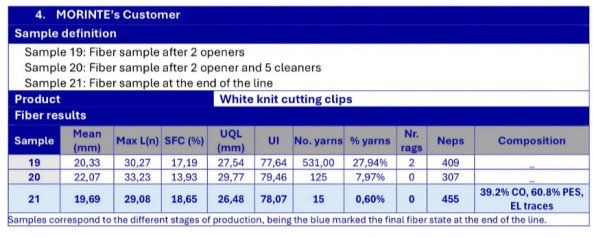
This is the ultimate question regarding final product quality. Key metrics for evaluating opening performance are average fiber length and short-fiber content (the proportion of fibers under 16 mm). A high-quality opener can preserve average fiber length in the range of 20–25 mm, while keeping short-fiber content within 15%–20%. The single-yarn breaking strength of reclaimed fibers typically falls between 10–15 cN/tex—approximately 60%–70% that of virgin fibers—sufficient for manufacturing denim, canvas, mop yarn, or nonwoven fabrics.
When processing materials like cotton and polyester, high-speed friction does generate heat, posing a safety hazard. Premium equipment design must account for this. In our textile waste recycling lines, the metal spark detector/extinguisher plays a pivotal role in shifting the safety perimeter forward—addressing not "how to put out a fire," but "how to prevent one from starting in the first place."
During opening, shredding, and pneumatic conveying, sparks can easily be generated by:
Metal objects (buttons, zippers, screws) colliding with high-speed rotating beaters or tines, creating friction sparks.Fibers wrapping around shaft ends, overheating to their ignition point and producing embers.
These sparks or glowing particles travel through the ductwork at speeds of 5–25 m/s. If they reach downstream cotton boxes or dust collection units, a major fire can erupt within seconds. The metal spark detector is mandatorily installed on pneumatic conveying ducts. Its role is to intercept ignition sources before they enter critical equipment: upon detecting sparks or burning debris, the actuator responds within 200 milliseconds—shutting off the conveying duct and diverting the "fire seeds" into a drop box where they are extinguished. This mechanism functions as an automatically activated "fire door" for the entire line.
Incorporating a metal spark detector/extinguisher into the production line is essentially a relatively modest equipment investment that hedges against extremely high accident-related costs.