

2026/07/02
The textile waste recycling industry operates at an average capacity utilization rate of only about 50.59%. Once the equipment stops, that day's output is lost entirely—and worse, delayed orders mean lost customers and eroded market share.
The reality of this industry is uniquely challenging: feed stock composition varies widely, contaminants are abundant, and equipment runs under continuous, high-intensity stress. The question is never if a breakdown will happen—but how long it will take to get back online.
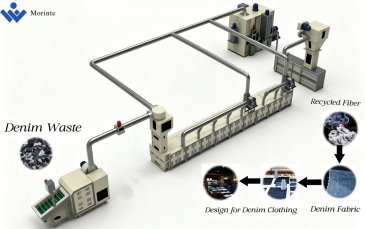
When a supplier is thousands of miles away, on-site support is reduced to phone calls and remote guidance. For a line processing dozens of tons per day, what does one week of downtime mean?
It means hundreds of tons of raw material piling up, unable to be processed. It means committed orders cannot be fulfilled on time. It means your customers turn to your competitors.
Distance is the single biggest multiplier of downtime losses.
Understanding that "distance equals cost," we have built a localized service network across the world's core textile waste recycling regions:
Bangladesh – the world's second-largest garment exporter, generating enormous volumes of textile waste, yet its domestic recycling capacity handles only 5–7% of front-end waste. Our agents are stationed in Dhaka and Chittagong, ready to respond.
Pakistan – Faisalabad processes over 85% of the country's textile waste, hosting more than 106 recycling facilities—the densest recycling industrial belt in South Asia. Our network covers Faisalabad and Karachi.
Vietnam – a vital link in the global textile chain, now experiencing explosive growth in recycling, with international giants like Recover setting up large-scale plants. Our local service teams are already in place.
India – the textile recycling market is projected to reach USD 3.5 billion by 2030, with over 7.8 million tons of textile waste generated annually. Our agents cover multiple recycling clusters across India.
Spare Parts at Your Fingertips: Downtime Reduced from Days to Hours
The most frustrating moment during a breakdown is when the engineer arrives—but the spare parts haven't.
We have changed this entirely. In every country where we have agents, we maintain local spare parts warehouses. Common wear parts and critical components are pre-stocked locally. By the time our engineer reaches your plant, the needed part is either in the toolkit or ready for immediate pickup. Diagnosis, replacement, adjustment, restart—all in one seamless flow.
What used to take days waiting for parts is now compressed to mere minutes of "grab and go."
Textile waste is inherently combustible. Hidden metal zippers, buttons, eyelets, and other rigid contaminants, when struck by high-speed rotating blades, generate sparks instantly capable of igniting fibers. And because waste fibers have low ignition points and are fluffy and highly flammable, once a spark lands, fire spreads alarmingly fast.
The real danger lies deeper: sparks occur inside enclosed ducts and equipment, traveling at high speed with the air stream. From generation to reaching the next process stage takes just seconds. By the time operators see smoke and grab a fire extinguisher, the fire source has already entered mixing chests, carding machines, or even the finished-goods storage.
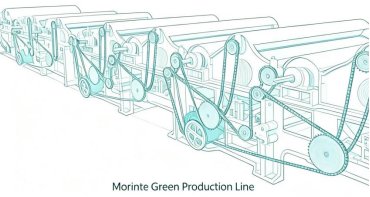
True fire protection is not about extinguishing after ignition—it's about detecting and eliminating sparks the very moment they are generated.
That is precisely what the Metal Spark Detector delivers.
Installed directly on the conveying duct, the system performs real-time, online monitoring with a three-tier defense:
Detection – Highly sensitive infrared sensors continuously monitor the duct for spark radiation; a metal detection module identifies ferrous contaminants ≥Φ3mm—every button or zipper tooth is caught.
Ejection – Upon detecting a spark or metal, the control system responds in ≤200 milliseconds, diverting the contaminated material stream into a waste bin via a fast-acting flap. The spark is "intercepted" before it can ignite surrounding fibers.
Extinguishing – An integrated water spray instantly mists the collected material, completely quenching any remaining embers. Advanced models support automatic sprinkler activation, achieving a fully closed-loop process from detection to extinguishing.
A line equipped with a Metal Spark Detector gains a 24/7 intelligent fireguard—always on, whether day or night, manned or unmanned, silently protecting your workshop.
Our local agents and parts inventories across four countries are not added services—they are your insurance policy on return on investment. The Metal Spark Detector is not a cost—it is a survival necessity.