

2025/12/24
As the concept of circular economy accelerates globally, the European textile recycling industry is approaching a crucial turning point. Through systematic layout of the recycling system, improvement of the regulatory framework, and promotion of technological innovation, Europe is expected to achieve a leapfrog development in textile material recycling.
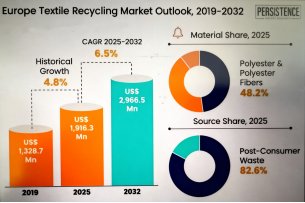
1,Massive waste volume holds great value potential. It is reported that Europe generates a large amount of textile waste each year, most of which is still burned or landfilled, resulting in raw material waste and environmental pressure. Based on current market valuation, the value of textile fibers is approximately 2-3 euros per kilogram, meaning that Europe is discarding a batch of resources with significant economic potential every year. The existing raw material base is sufficient to support regional industries.
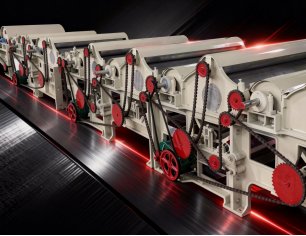
2,Clear technical path: mechanical recycling as the main approach, supplemented by chemical recycling, to achieve a large-scale and sustainable textile recycling system, reasonable technical division of labor should be found among different material properties. Mechanical recycling should be the main process, as it is cost-effective, energy-efficient, and particularly suitable for intact fabric structures; chemical recycling is applicable to pure polyester or highly degraded textiles, providing an outlet for materials that are difficult to process mechanically.
3,Expand application scenarios: from textile recycling to cross-industry materials. It is pointed out that recycled fibers do not have to be limited to reprocessing into clothing or yarn; their uses can also extend to building materials such as concrete and asphalt, further expanding market demand and creating more possibilities for the industry chain. For more difficult-to-handle mixed fibers and low-quality waste, the importance of thermal mechanical recycling is emphasized. This process can convert difficult-to-separate or low-value waste into plastics and composite materials, providing a cost-effective recycling path for "the most difficult-to-recycle parts", and also forming potential synergy with the plastic recycling industry.
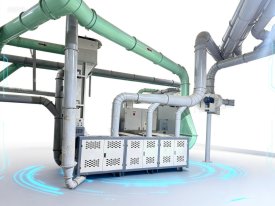
2,Regionalized industrial structure is expected to reshape the European supply chain. With the maturity of recycling technology and scale expansion, Europe is expected to reduce its reliance on Asian textile raw materials. Research indicates that the long-term relocation of textile manufacturing has led to a fragile supply chain, and increasing the local production of recycled materials can help shorten the supply chain, reduce carbon emissions, and enhance industrial resilience. In addition, the natural regional dispersion of the textile recycling network - such as collection points, sorting centers, mechanical recycling facilities, etc. - enables small and medium-sized enterprises to participate, promoting the growth of local economies and the circular industry together.
3,With the collaborative promotion of policies, investment, and technology, textile recycling is not only an environmental issue but also an important part of the future industrial strategy. For governments, enterprises, and technology developers, the signals released by research are very clear: a scalable European textile recycling system is not only feasible but also imperative. The employment opportunities, industrial opportunities, and environmental benefits it brings will drive Europe to occupy a more crucial position in the global circular economy.
