


Yarn waste cutting machines are specialized equipment designed to efficiently process and recycle yarn waste. These machines typically feature high-speed cutting blades or choppers that quickly and accurately cut yarn waste into smaller pieces, making it easier to handle and reuse.
Yarn waste cutting machine is mainly used for chemical fiber, breast fiber, glass fiber, all kinds of textiles, old cloth and all kinds of waste yarn, cutting waste cloth, waste cloth, etc., after cutting them into small pieces, they can be recycled. It is used as the first production process in the production line of textile waste recycling machines. The cutting length can be adjusted between 5-20cm, and the speed can also be adjusted according to the need, our cutting machine has different models to meet different capacity requirements, we will recommend the appropriate model according to your requirements.
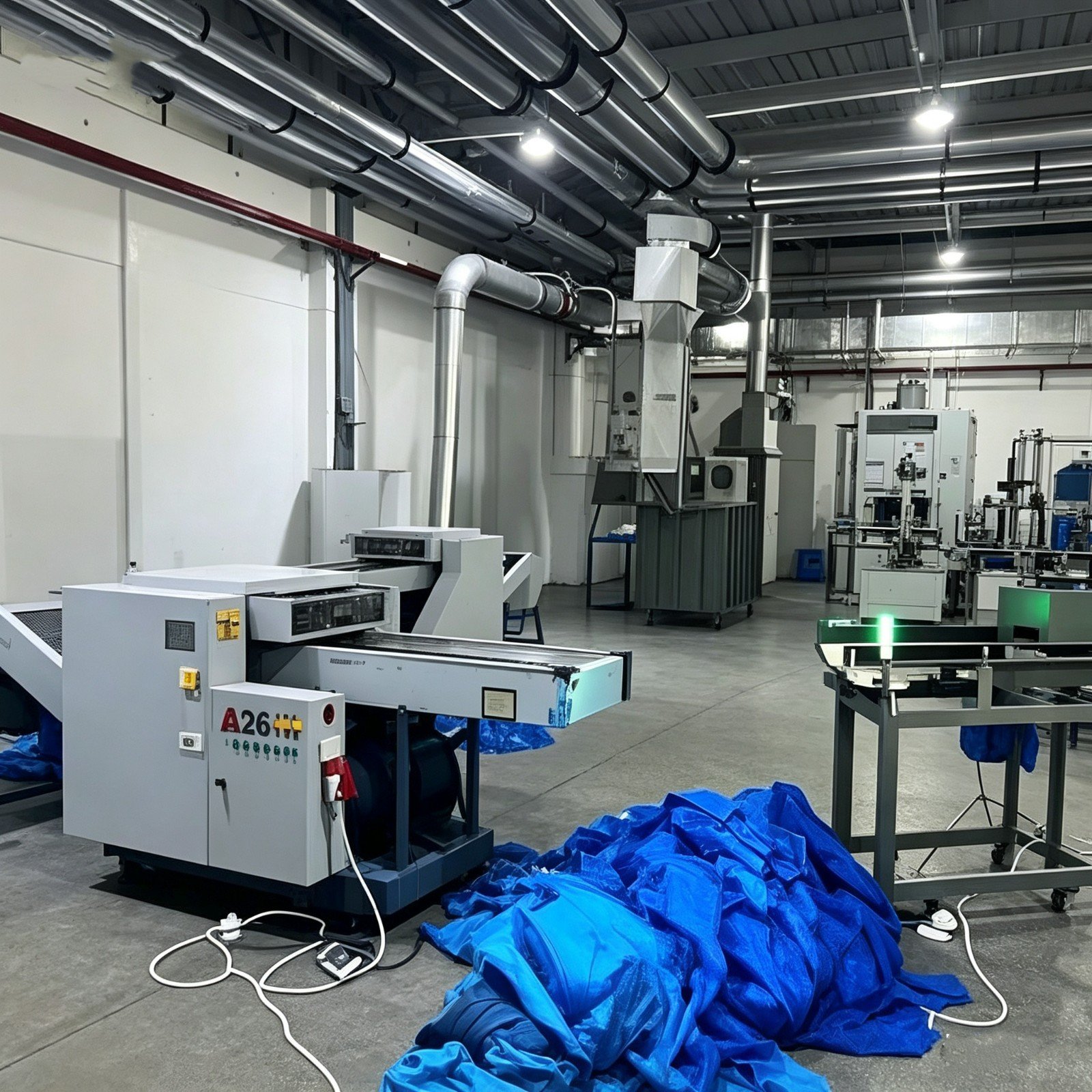
The Yarn waste cutting machine uses high-strength tungsten carbide cutting tools to fully highlight the rigidity and strength of the machine. Cutting machine using continuous rotation of the blade roller, according to a certain position and slope direction, the direction of the blade drives the direction of the milling head rotation, with a fixed blade, the cooperation between the two tools is very close, continuous rotation of the rotary knife, raw material feeding system automatic pressure cutting, and then through the conveyor belt automatic transmission cutting.
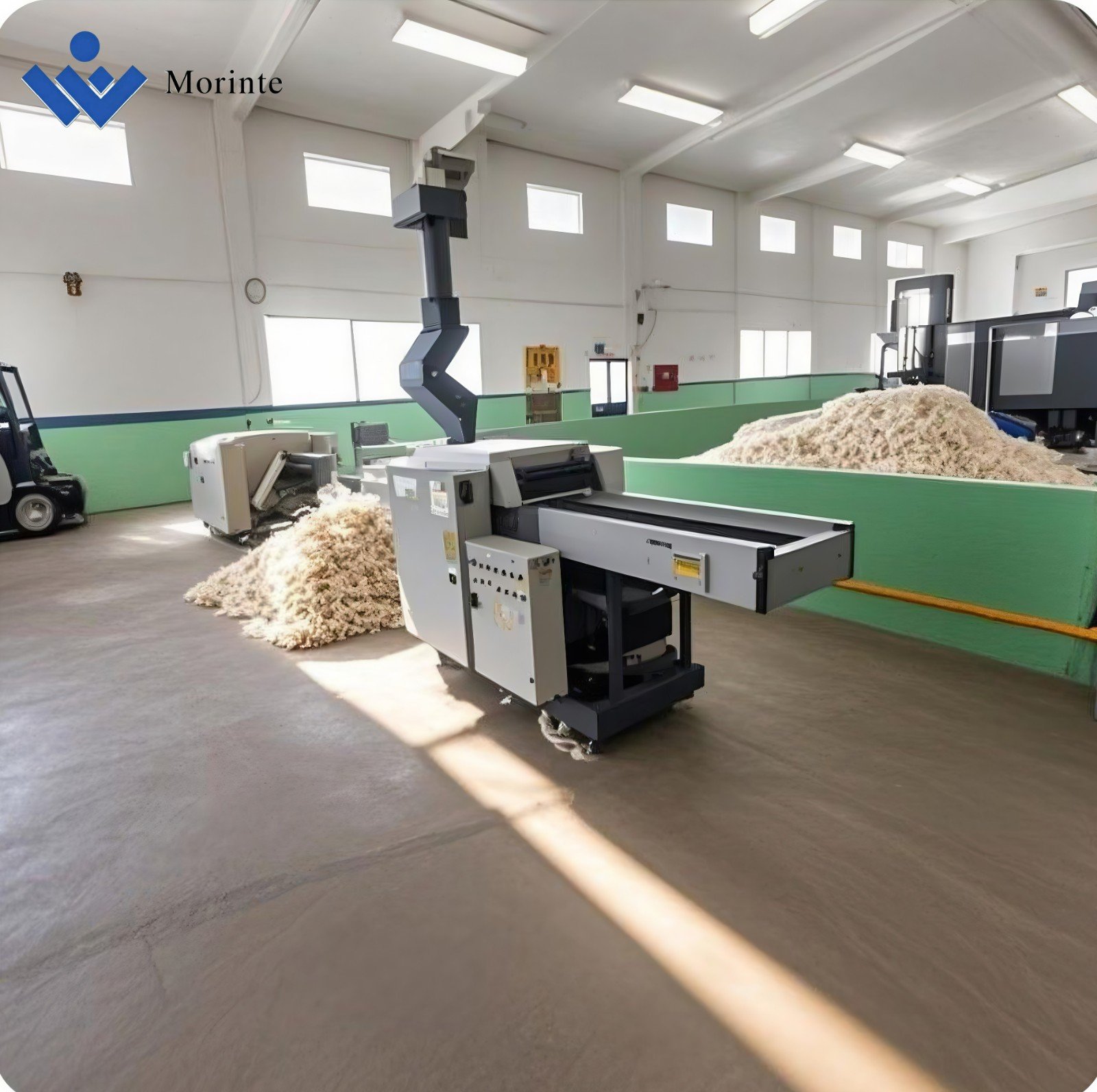
Model | 800MT | 1200MT | 1600MT | 2400MT |
Capacity | 500–800 kg/h | 800–1200 kg/h | 1000–3000 kg/h | 3000–4000 kg/h |
Main motor | 8P+7.5KW | 8P + 15 kW | 8P + 18.5 kW | 8P + 15 kW(Two sets) |
Conveyer motor | 4p1.5kw | 4p2.2kw(variable frequency motor) | 4p3.0kw(variable frequency motor) | 14p4.0kw(variable frequency motor) |
Belt wheel | Θ100 | Θ140 | Θ120 | Θ140 |
Moving blade base | Θ300 | Θ400*600 | Θ500*800 | Θ600*1200 |
Feeding conveyor | 1400*330 mm | 3000*520 mm | 3000*720 mm | 3000*1100 mm |
Machine size | 2100*1000*1100 | 1400*1450*1500 | 1550*1700*1550 | 2100*1900*1550 |
Cutting size | 2.5.8cm | tunable | tunable | tunable |
This equipment is designed for cutting and reducing the volume of various soft waste materials. It is widely used in waste recycling pretreatment across industries such as textiles, leather, plastics, and paper.
I. Applicable Material Types
Material Category | Specific Examples |
Textile Waste | Fabric scraps, cloth strips, waste yarn, cotton wadding, non-wovens, used clothing, towels, bed sheets, industrial felt |
Leather Waste | Leather offcuts, artificial leather, PU/PVC synthetic leather waste |
Soft Plastics | Woven bags, FIBC (ton) bags, agricultural film, packaging film, plastic ropes, packing straps |
Paper Waste | Waste paper, cardboard scraps, molded pulp waste |
Other Soft Materials | Sponge, thin foam, coir, hemp fiber, composite soft materials |
It can process a wide range of textile waste, including waste yarn, waste cotton yarn, chemical fiber filaments, nylon filaments, fabric trimmings, scrap fabrics, and garment edge trimmings. It performs well on both soft and hard materials, as well as long and short fibers.
The output size is typically between 5–20 cm, depending on the blade roller configuration and discharge screen mesh size. The size can be adjusted by changing the screen mesh or by adjusting the roller speed and the gap between the rotary and fixed blades to meet the requirements of subsequent opening or spinning processes.
The blades are made of high-strength tungsten carbide (e.g., cemented carbide) or high-carbon steel, offering high hardness and wear resistance. Under normal operating conditions, the blade service life is quite long (typically 3–6 months or more, depending on material hardness). Blades can be resharpened multiple times for reuse, reducing replacement costs.
The machine uses a shear-type cutting principle (rotary blade cooperating with a fixed blade) rather than tearing or pulling, so fiber damage is minimal. The cut fiber ends are neat, which benefits subsequent opening and spinning processes by achieving better fiber length and uniformity.
The machine is equipped with safety guards, emergency stop buttons, and overload protection devices. Some advanced models also include self-locking wheels and photoelectric sensors to ensure operator safety during high-speed operation. The feed inlet is also designed with anti-draw-in structures.
Production capacity typically ranges from 100–500 kg/h, depending on the model and material type. The machine is usually equipped with an automatic conveyor belt feeding device, eliminating the need for manual repeated feeding and significantly reducing labor intensity. The feeding speed is adjustable to suit different material characteristics.
If you have any questions or needs about the product, please fill in the following form and we will contact you as soon as possible.