


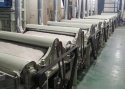
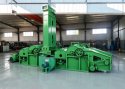
Waste fabric yarn recycling machine special designed to recycle weaving and hosiery fabric waste, two MT600 opening machine tearing the fabric and feed to 1300mm recycling line, that can improve the capacity to 300-350kg per hour and get long fiber. High output fiber which can be used for yarn making.
Waste Fabric and Yarn Recycling Production Line is an industrial system specifically designed for the textile industry, aimed at processing waste materials generated during production—such as waste yarn, scrap fabric, and garment cutting leftovers—through opening and impurity removal processes, thereby reducing them to a reusable fibrous state. The recycled fibers produced by this production line can be reintroduced as raw materials into spinning, nonwoven fabric production, filling material manufacturing, and other applications. It serves as key equipment for the textile industry to achieve resource circular utilization and sustainable development goals.
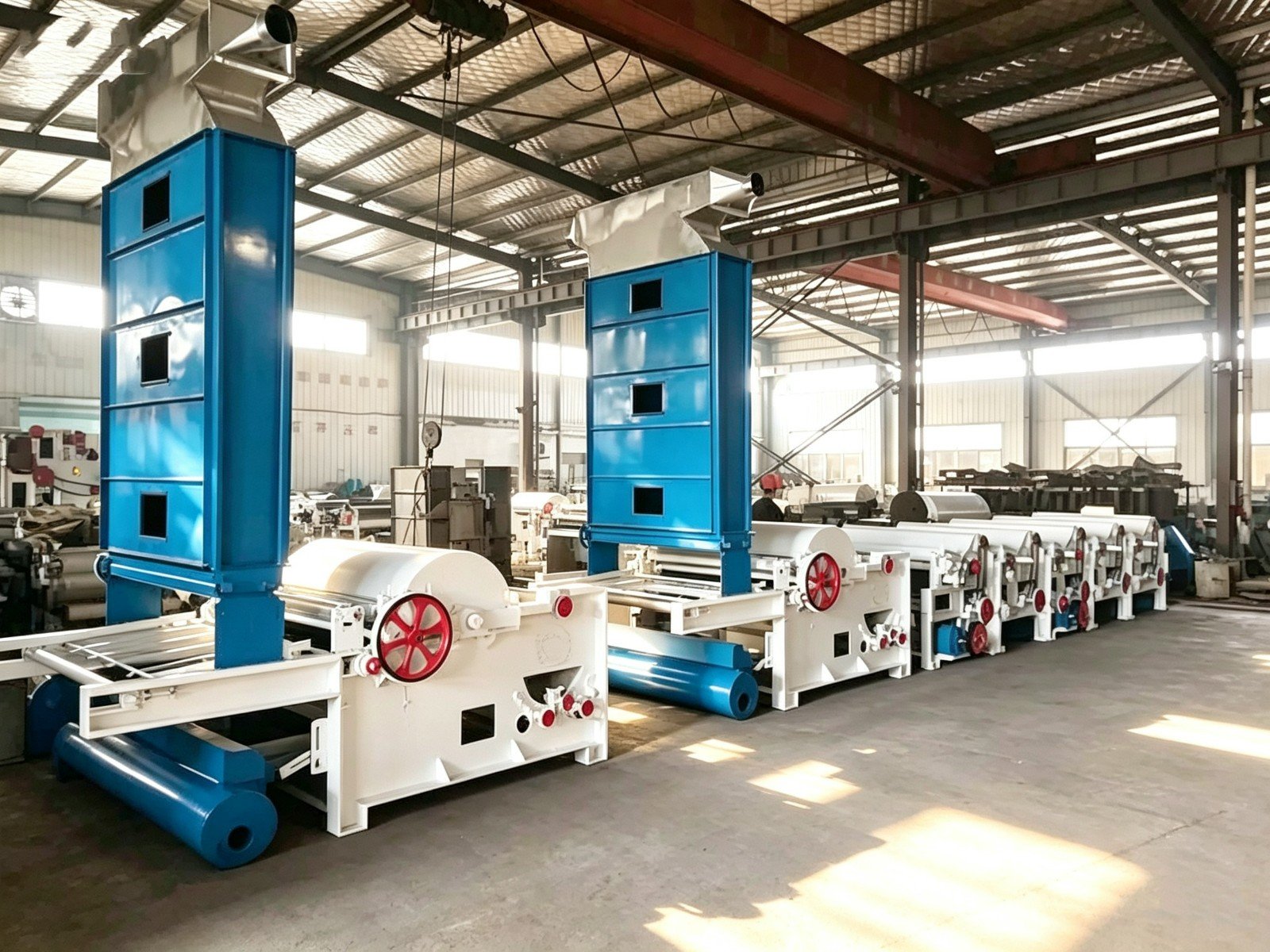
This recycling production line typically adopts a modular design, allowing flexible configuration according to raw material characteristics and end-product requirements. The core process flow is as follows:
Pre-opening and Cutting: The pre-opener or cutting machine (such as rotary or guillotine-type) located at the front end of the production line is responsible for the initial decomposition of large, dense fabrics or baled waste yarn, creating favorable conditions for subsequent fine opening. Certain models feature special feeding designs that can accommodate various forms of raw materials, enabling smooth feeding without excessive pre-cutting, which helps preserve fiber length.
Fine Opening and Impurity Removal: This is the core stage of the production line, typically consisting of multiple openers (e.g., coarse opening rollers and fine opening rollers) arranged in series. The equipment utilizes the mechanical centrifugal force generated by high-speed rotating licker-in rollers (with roller surfaces covered by metallic card clothing or wire points) to thoroughly open the material into a single-fiber state, while effectively separating impurities mixed within (such as yarn ends, neps, dust, etc.). To enhance fiber purity, modern models adopt a double-sided suction design in the dust cage structure, which significantly reduces neps and short fibers in the recovered material. Additionally, the suction system is positioned at the bottom of the machine for ease of maintenance and installation.
Dust Removal and Baling: The opened fibers are conveyed via a pneumatic conveying system into dust collection devices (such as rotary dust filters) to further capture dust and ensure a clean working environment. Finally, the recovered fibers are compressed by a hydraulic baling press into bales of specified dimensions and weight, facilitating convenient storage and transportation.
The application fields of the waste fabric and yarn recycling production line are extremely extensive. The regenerated fibers it produces are no longer limited to low-end products, but can re-enter the high-quality textile value chain, achieving a closed-loop cycle of "textile-to-textile" (T2T).
Home Textiles and Household Products: Recycled fibers are also widely used in the production of bed sheets, duvet covers, home upholstery fabrics, and other household textile items.
Automotive and Transportation Interiors: Recycled fibers can be used as raw materials for automotive seat padding, interior upholstery fabrics, and other interior trim components.
Specialty and Engineering Materials: Certain high-value waste textiles with special performance characteristics—such as firefighter protective suits (which contain aramid materials)—hold greater recycling value. Through specialized recovery processes, these can be transformed into high-value aramid-based recycled products. In addition, recycled fibers can also serve as raw materials for packaging materials and engineering materials.
Building Materials: For waste textiles that are difficult to separate finely, they can be compressed into panels or boards for application in the construction sector, thereby achieving effective resource utilization.
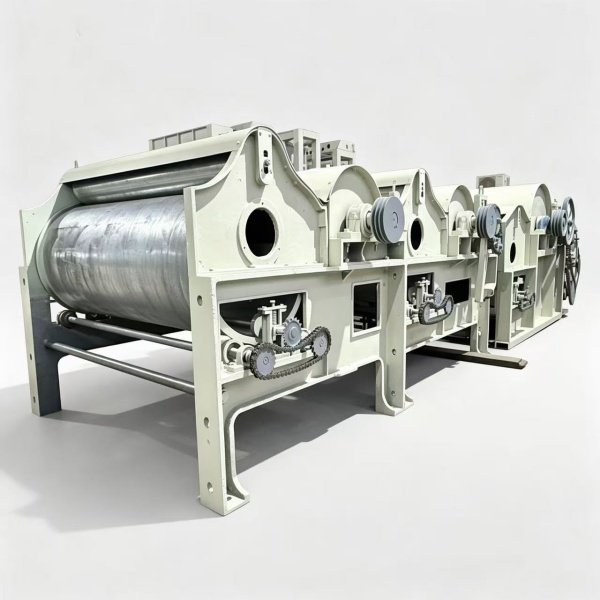
| Model NO. | MT600-400-250 | Delivery Time | 15-30 Days |
| Service | OEM/ODM | Color | ANY COLOR |
| Roller Dia. | 600-400-250mm | Machine Width | 1000mm 1300mm 1500mm |
| Power | 96.5kw | Wire | 9210, 5610 |
| Transport Package | Stadard Exporting Package | Specification | Set |
| Trademark | Morinte | Origin | Shandong, China |
| HS Code | 84451900 | Production Capacity | 50 Sets/Month |
| Manufacturing Technology | Laser Cutting Technology | Capacity | 200-300kg/H |
| Electrical Components | According to the customer's requiremen | Spare Parts | Wire and Cylinder |
| Voltage | 380V, Customized | After-sales Service | Onsite, Video Support |
We employ a progressive opening process that precisely controls the linear speed differentials between individual rollers, effectively removing impurities while maximizing the preservation of fiber length. The resulting recycled fibers exhibit sufficient tensile strength to meet the requirements of downstream applications such as spinning, nonwoven fabric production, and filling materials. While the performance of recycled fibers does differ to some extent from that of virgin fibers, our process optimization ensures that their quality is brought to the highest possible level.
Operating costs mainly consist of electricity consumption, replacement of wear parts, labor maintenance, and plant amortization. Our advanced models achieve a unit energy consumption as low as 0.3 kWh/kg, placing us at the forefront of the industry. Wear parts (such as card clothing and licker-in rollers) are manufactured from high-quality materials, with a service life exceeding 5,000 hours, effectively reducing long-term operating costs.
This is one of our key technical strengths. The front end of the production line can be optionally equipped with metal detection and automatic rejection devices, which work in conjunction with our high-efficiency opening and air classification systems to effectively separate non-textile impurities such as metals and plastics during the opening process. For hard contaminants that are difficult to automatically separate, we recommend manual pre-treatment prior to feeding; alternatively, we can also provide automated dismantling solutions upon request.
The standard warranty period is 12 months (extendable for key components). We commit to 24/7 online technical support, and have authorized service providers or spare parts warehouses in major market regions, ensuring on-site service within 48 hours in urgent situations (subject to regional conditions). Upon equipment delivery, we provide on-site installation, commissioning, and operation training to ensure your team can get up and running quickly.
If you have any questions or needs about the product, please fill in the following form and we will contact you as soon as possible.