


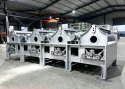
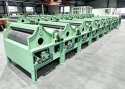
Used denim waste recycling machine can be well used to recycle denim fabric and jeans into fiber, the output fiber can be used for yarn making. This used Denim waste recycling machine include one set MT600 and one set MT400 opening machine, five sets MT250 recycling machine.
Used Denim waste recycling machine production line that uses purely physical and mechanical methods—such as cutting, opening, and carding—to reduce waste denim and other textiles into reusable recycled fibers. Its typical process is as follows: waste fabrics are first cut into small pieces, then strongly torn and opened by components like tackling rollers to break the material back into a cotton-like fibrous state. Subsequently, these fibers undergo multiple carding processes to remove impurities and separate fibers by length, and are finally compressed and baled into finished recycled fibers. This type of production line has high processing capacity, converting waste material into industrial raw materials used for making low-count yarns, industrial wipers, or fillers, making it a mainstream solution for large-scale resource utilization of waste textiles
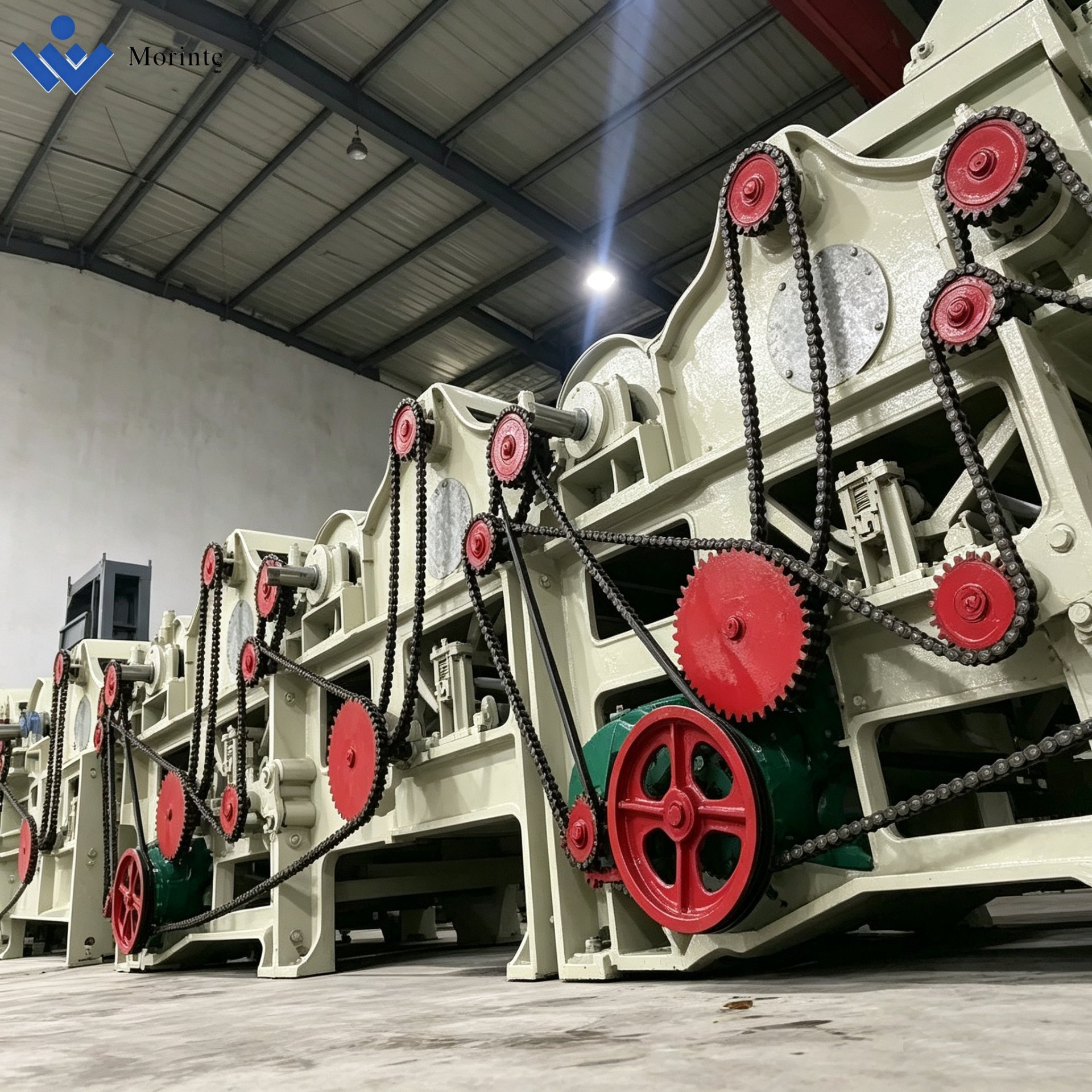
A typical Used Denim waste recycling production line mainly consists of the following core components:
Cutting Machine: Initially cuts the recycled denim and other raw materials into uniformly sized small pieces, preparing them for subsequent processing.
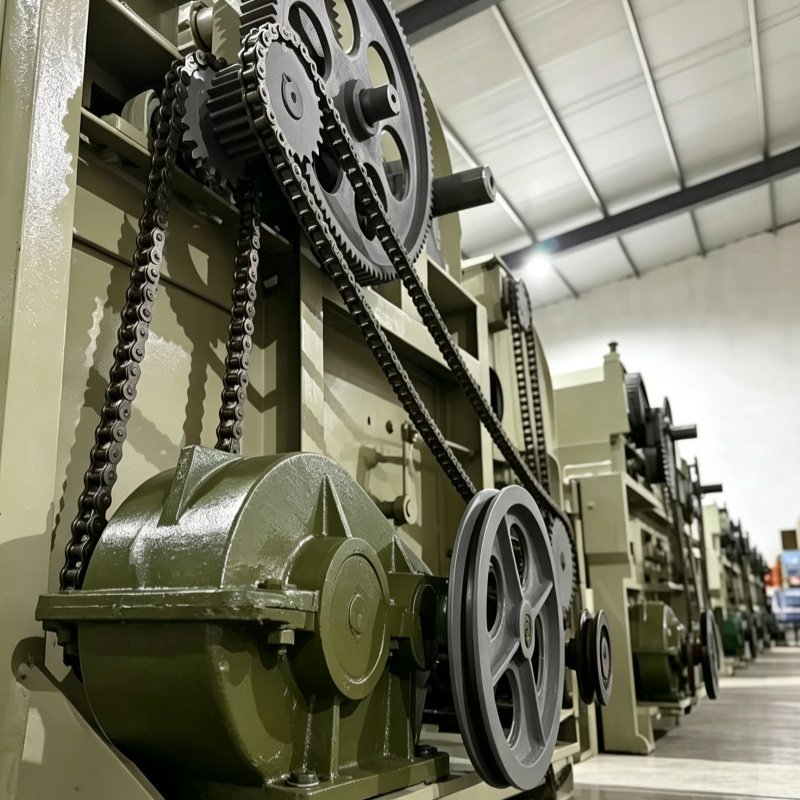
Opening Machine: Uses components such as tackling rollers to strongly tear and open the fabric pieces, reducing them into a cotton-like recycled fiber. One or more opening machines are often set up to improve the effect.
Carding Machine: Performs multiple stages of fine carding on the opened fibers to remove impurities, separate long and short fibers, and make the fiber arrangement more uniform, thereby improving the quality and spin-ability of the recycled fiber.
Automatic Baler: Compresses and bales the processed recycled fibers for easy storage and transportation, turning them into a standard industrial raw material.
In addition, to ensure efficient and environmentally friendly production, the production line is typically equipped with auxiliary equipment such as condensers (for conveying fibers between machines), dust removal systems (for collecting dust generated during processing), and conveying pipelines, connecting the main machines into an automated assembly line.
| Model NO. | MT600-400-250 | Delivery Time | 15-30 Days |
| Service | OEM/ODM | Color | ANY COLOR |
| Roller Dia. | 600-400-250mm | Machine Width | 1000mm 1300mm 1500mm |
| Power | 96.5kw | Wire | 9210, 5610 |
| Transport Package | Stadard Exporting Package | Specification | Set |
| Trademark | Morinte | Origin | Shandong, China |
| HS Code | 84451900 | Production Capacity | 50 Sets/Month |
| Manufacturing Technology | Laser Cutting Technology | Capacity | 200-300kg/H |
| Electrical Components | According to the customer's requiremen | Spare Parts | Wire and Cylinder |
| Voltage | 380V, Customized | After-sales Service | Onsite, Video Support |
The EU's mandatory requirement to add recycled fibers in textiles has upgraded the waste cotton recycling machine from a "cost-saving and efficiency-improving auxiliary equipment" to a "strategic asset for gaining market access." Combined with multiple pressures such as carbon tariffs, carbon labels, and environmental compliance, the waste cotton recycling machine has become essential equipment for textile companies to maintain export competitiveness and secure their access to the EU market.
The textile industry is the second largest polluter in the world. The waste cotton recycling machine uses mechanical opening and cleaning technology to convert waste cotton that would otherwise be landfilled or incinerated into renewable resources:
Reduces waste pollution: Prevents the generation of methane from landfill and toxic gases such as dioxins from incineration
Saves water resources: Recycling one ton of waste cotton fiber can save thousands of tons of water compared to growing virgin cotton
Lowers carbon footprint: The energy consumption of mechanical recycling is far lower than the entire chain of virgin cotton cultivation, processing, and dyeing
Promotes circular economy: Achieves a closed loop of "waste → fiber → product", reducing dependence on natural resources
The EU Carbon Border Adjustment Mechanism (CBAM) is the world's first carbon tariff mechanism. It was officially implemented on January 1, 2026, and will be expanded to cover 180 downstream products in 2028. Textile and apparel products are expected to be included around 2030.
Cost quantification: A study from Bangladesh shows that apparel exports to the EU could face an additional 4.8% carbon tariff
The role of the waste cotton recycling machine: The carbon footprint of recycled fibers is much lower than that of virgin fibers. Using recycled fibers can directly reduce the carbon footprint of products, thereby lowering or avoiding carbon tariffs.
Time frame | Key Measures & Requirements | Explanation |
2025 | Mandatory separate collection of textile waste | Provides the raw material base for recycling; start of regulatory transition period |
2027 | Introduction of Digital Product Passports (DPP); ban on destruction of unsold textiles | Establishes a material traceability system; closes loopholes for non-circular disposal |
2028 | First mandatory recycled fiber content target (≥10%) | This is the clearest and earliest compliance threshold to date. |
2030 | Increased recycled fiber content target (approx. 15%) | Policy enters an acceleration phase; standards are further raised. |
2035 | Achievement of higher circularity goals (approx. 30%) | Long-term mature goal; the industry completes its structural transformation. |
This equipment is designed to maximize processing capacity and can quickly and effectively handle a large amount of denim waste. The specific production capacity parameters vary by model and configuration. It is recommended to consult the supplier for a customized solution based on production requirements.
The general delivery cycle is 30 days.
The available payment methods include:T/T (Wire transfer) L/C (Letter of Credit) D/P (Payment and Document Submission
Yes, the product not only has a qualification certificate, but also holds international certifications such as CE certificate and ISO certificate. Each machine undergoes strict inspection before leaving the factory.
Comprehensive after-sales service includes
Installation assistance
Operator training
Continuous technical support (maintenance and troubleshooting)
If you have any questions or needs about the product, please fill in the following form and we will contact you as soon as possible.