
2026/03/02
When the EU's 《EU Strategy for Sustainable and Circular Textiles》 officially came into effect, when the US's 《SB-707: Responsible Textiles Recovery Act of 2023》 was put on the agenda, and when consumers around the world consider "sustainability" as the top criterion for their purchasing decisions - the European and American textile markets are undergoing an unprecedented green revolution.
The EU requires that by 2030, all textiles must use at least 20% recycled fibers, andby 2040, the proportion should reach 50%. Starting from 2025, the destruction of unsold or returned textiles is prohibited. Alternatives include donating to charitable organizations or social welfare institutions; reusing or recycling processing.Export to recognized non-EU countries (must meet environmental standards). Enterprises with an annual turnover of over 50 million euros are required to publicly disclose the quantity of discarded and destroyed products. Annual reports on textile waste disposal are submitted, including reutilization, recycling, incineration or landfill situations. By 2030, the textile recycling rate will reach 50%, and by 2035, it will reach 60%. Reuse requirements: At least 30% of textile waste must be reused or recycled at the primary level.
On September 28, 2024, approved by the Governor of California, USA, the "SB-707: Responsible Textiles Recovery Act of 2023" will be officially implemented on July 1, 2028. This act clearly stipulates that brand owners, manufacturers, importers, and online market sellers who sell textiles in California must establish or join a Producer Responsibility Organization (PRO), and submit a list of their selling brands to the California Resources Recovery Department (CalRecycle), and update it regularly. This act has received support from companies and institutions such as IKEA and Goodwill.
Our textile waste recycling line is not a simple collection of equipment; instead, it is a tailor-made profit solution for recycled fibers specifically designed for textile enterprises.
Firstly:
1,Transform the textile waste that was originally subject to payment for disposal into reusable fiber raw materials, filling materials, etc., thereby creating new revenue sources and offsetting the pressure of rising raw material prices.
2,Reduce the costs paid by enterprises to third parties for landfilling and incineration, while saving the cost of purchasing virgin fibers, and double compressing production costs.
3,Apply for policy benefits such as environmental protection subsidies and tax reductions from the government, and in some areas, obtain additional income through carbon emission trading.
Secondly:
1, Comply with the latest regulations of Europe and the United States regarding the Extended Producer Responsibility Act, avoiding penalties for violations and ensuring the stable operation of the enterprise within the compliance framework.
2,Communicate the concept of sustainable development to the market, enhance consumer trust, attract B-end and C-end customers who are concerned about environmental protection, and enhance the brand's premium value.
3, Gain a green advantage in the global supply chain, meet the ESG (Environment, Society, Governance) standards required by international brands for suppliers, and expand high-end cooperation opportunities.
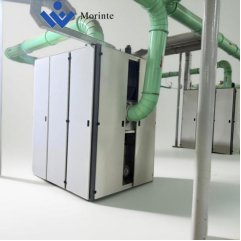
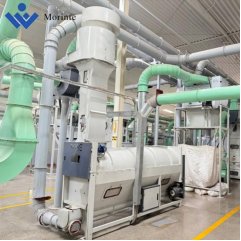
Our textile waste recycling production line can be flexibly configured according to the existing factory area and production capacity requirements, without the need for large-scale renovations. Our textile waste recycling production line has already gained a large number of users in Pakistan, Bangladesh, and India. Join us now and you will receive: Immediately meet the requirements for the entry of recycled fibers into the European and American markets; obtain the EU environmental protection certification and directly connect with European and American brand customers; 24-hour local technical support to ensure the stable operation of the production line.
This is a new challenge, but also an unprecedented opportunity. And the production capacity of recycled fibers is precisely the golden key that opens the door to the high-end markets in Europe and America.