


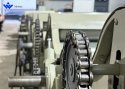
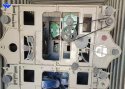

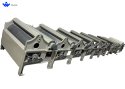
Cotton Recycling Machine is a key piece of equipment for enabling a circular economy in the modern textile industry. Through efficient mechanical opening and cleaning technology, it converts seemingly useless cotton waste into valuable renewable resources, helping factories reduce raw material costs while delivering significant environmental benefits.
This standard 1300mm width cotton waste recycling production line is a turnkey solution consisting of a 600 Opening Machine, 400 Opening Machine, and 250 Recycling Machine.
It is expertly engineered for opening and recycling:
Stitching chemical fibers & bast fibers
Nonwoven fabric scraps & wool spinning waste
Garment factory cutting clips & waste cloths
Leaf fibers and agricultural textile wastes
The processed material is transformed into high-quality new fibers ready for re-spinning or nonwoven production, delivering a stable output capacity of 200-250 kg/h. Custom configurations (Normal Type & High-Efficiency New Type) are available upon request.

Product parameters
Model: | MT600*1000mm | MT400*1000mm | MT250*1000mm |
Capacity: | 300-350kg/h | 250-300kg/h | 200-250kg/h |
Roller size: | 600*1000mm | 400*1000mm | 250*1000mm |
Dust case: | 4kw fan to transport materail | 500*1300mm | 500*1300mm |
Power: | 37kw/roller | 30kw/roller | 30kw/roller |
Weight: | 1500kgs | 1100kgs | 650kgs |
What aspects are Cotton recycling machines applied to?
The application of textile waste recycling machines spans the entire chain, from production waste to post-consumer garments and then back to new products, making them a key link in enabling a circular economy for the textile industry.
1. Industrial Production Waste Processing
This is currently the most technologically mature and widely applied direction. It mainly processes by-products, waste yarn, and fabric scraps generated during textile and garment manufacturing. These wastes have a relatively single composition and high cleanliness, offering great recycling value. The recovered fibers can basically be directly reused in production
2.Post-consumer waste
This is currently the technological focus. It processes discarded old clothes, bed sheets, towels, etc. from our daily lives. The difficulty lies in the complex composition (often containing blends like polyester and spandex) and the need to first remove impurities such as zippers and buttons
Scenario | Waste Source | Recycling Machine Function | Final Product |
In-Plant Textile Mill Recycling | Waste cotton and broken yarn from the spinning process | On-site recycling, immediate opening and impurity removal | Remixed with new cotton for spinning, reducing raw material costs |
Garment Factory Scraps | Cotton fabric scraps from T-shirt cutting | Centralized collection, fiberization | Made into automotive soundproofing cotton or industrial wipers |
Used Clothing Recycling Plant | Discarded jeans and old sweaters from households | Removal of buttons and zippers, then fiberization | Made into recycled yarn, or directly used as filling material (e.g., cushion core) |
Nonwoven Fabric Mill | Textile waste purchased from other factories | Specialized processing into fiber | Continuous production of geotextiles |
What can the recovered materials be used for?
The recycled fibers obtained after the machine processes the waste are mainly used in three directions:
1. Re-spinning: Higher quality recycled fibers are blended with virgin fibers in a certain ratio and re-spun into yarn, which can then be made into T-shirts, jeans, home textiles, etc.
2. Nonwoven fabric production: This is the most widely used area. Recycled fibers can be made into:
Automotive interiors: Soundproofing cotton, seat linings, trunk mats
Industrial products: Geotextiles (used in road construction), filter materials, waterproofing membranes
Daily necessities: Carpets, mops, industrial wipers
3. Filling materials: Shorter recycled fibers are an excellent quality filler, used for sofas, back cushions, seat cushions, dolls, insulation layers, soundproofing layers, etc.

The EU's mandatory requirement to add recycled fibers in textiles has upgraded the waste cotton recycling machine from a "cost-saving and efficiency-improving auxiliary equipment" to a "strategic asset for gaining market access." Combined with multiple pressures such as carbon tariffs, carbon labels, and environmental compliance, the waste cotton recycling machine has become essential equipment for textile companies to maintain export competitiveness and secure their access to the EU market.
The textile industry is the second largest polluter in the world. The waste cotton recycling machine uses mechanical opening and cleaning technology to convert waste cotton that would otherwise be landfilled or incinerated into renewable resources:
Reduces waste pollution: Prevents the generation of methane from landfill and toxic gases such as dioxins from incineration
Saves water resources: Recycling one ton of waste cotton fiber can save thousands of tons of water compared to growing virgin cotton
Lowers carbon footprint: The energy consumption of mechanical recycling is far lower than the entire chain of virgin cotton cultivation, processing, and dyeing
Promotes circular economy: Achieves a closed loop of "waste → fiber → product", reducing dependence on natural resources
The EU Carbon Border Adjustment Mechanism (CBAM) is the world's first carbon tariff mechanism. It was officially implemented on January 1, 2026, and will be expanded to cover 180 downstream products in 2028. Textile and apparel products are expected to be included around 2030.
Cost quantification: A study from Bangladesh shows that apparel exports to the EU could face an additional 4.8% carbon tariff
The role of the waste cotton recycling machine: The carbon footprint of recycled fibers is much lower than that of virgin fibers. Using recycled fibers can directly reduce the carbon footprint of products, thereby lowering or avoiding carbon tariffs.
Time frame | Key Measures & Requirements | Explanation |
2025 | Mandatory separate collection of textile waste | Provides the raw material base for recycling; start of regulatory transition period |
2027 | Introduction of Digital Product Passports (DPP); ban on destruction of unsold textiles | Establishes a material traceability system; closes loopholes for non-circular disposal |
2028 | First mandatory recycled fiber content target (≥10%) | This is the clearest and earliest compliance threshold to date. |
2030 | Increased recycled fiber content target (approx. 15%) | Policy enters an acceleration phase; standards are further raised. |
2035 | Achievement of higher circularity goals (approx. 30%) | Long-term mature goal; the industry completes its structural transformation. |
Our recycling production line can instantly convert your factory's waste cotton, fabric scraps, and discarded clothing into high-value recycled fibers on site. Today, with the EU's mandatory requirements for adding recycled fibers and the pressure of carbon tariffs, this is not only a choice for cost reduction and efficiency improvement, but also an essential solution for securing your export market.
Good fiber length retention: How to minimize fiber damage during the opening process is key. The longer the fiber, the higher its spinning value.
High cleaning efficiency: Effectively removes neps, dust, hard lumps, and other impurities, improving the quality grade of the recycled fibers.
Low energy consumption: The total power of the production line directly affects electricity bills. Efficient drive designs and energy-saving motors are important selling points.
Low labor cost: The higher the degree of automation (e.g., automatic feeding, automatic baling), the fewer workers are required.
Long service life of wear parts: The replacement frequency and cost of core wear parts such as card clothing, saw blades, and screens directly impact downtime and maintenance expenses
Low material loss rate: The less effective fiber is carried away during the impurity removal process, the higher the output rate.
Textile mills typically require continuous operation, and downtime means direct financial loss.
Low operational failure rate: Key components (such as bearings and opening rollers) have sufficient design margins to handle hard objects accidentally mixed into the raw material (e.g., buttons, zippers).
Low risk of clogging: For different raw materials (especially waste fabrics with high moisture content), the design of the feeding system and air conveying channels effectively prevents clogging.
Durable machine structure: The frame and housing are made of steel with sufficient thickness to ensure no deformation during prolonged heavy-load operation.
Customers want a single piece of equipment to handle multiple types of waste, in order to broaden their raw material sources and reduce procurement risks.
Purchasing the equipment is only the beginning; ongoing support is crucial.
We have long-standing agents and technical support teams in Pakistan, Bangladesh, Vietnam, and Egypt, ready to quickly resolve any of your concerns.
Jinan Morinte Machinery
1. We have our own factory in China with experienced workers, a professional R&D team, and a responsible management team, ensuring continuous innovation of our production lines.
2. Our team attends global exhibitions regularly to keep our products at the industry forefront.
3. We have many overseas end users with long-term cooperation, and our lines are continuously optimized based on their feedback.
4. We provide a complete set of matching machines, customized according to customer needs.
1. Q:What's the minimum order quantity?
A:We can start with just 1 machine. We focus on finding the right fit for you
2. Q:What are your payment terms?
A:Standard terms are 30% deposit, 70% balance before shipment. We also accept Letters of Credit (L/C).
3. Q:How long is the delivery time?
A:For standard models, about 30-45 days. Custom machines may take a bit longer.
4. Q:What documents do you provide for customs?
A:Everything needed: Commercial Invoice, Packing List, Bill of Lading, Certificate of Origin, etc. We're experienced with export requirements.
5. Q:Can I see my machine before it ships?
A:Yes! We will send you testing photos and videos for your approval.
If you have any questions or needs about the product, please fill in the following form and we will contact you as soon as possible.