

2025/12/08
The benefits brought by this process are all-round and far-reaching, mainly reflected in the following three aspects:
1. Environmental benefits: Making the Earth more habitable
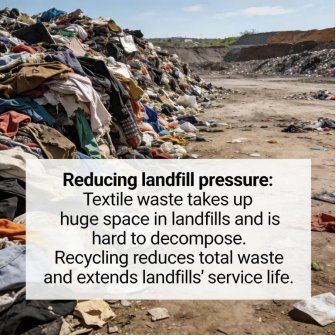
· Reduce the pressure on landfills: Textile waste occupies a huge space in landfills and is difficult to degrade, especially chemical fiber products. Recycling and reuse can directly reduce the total amount of garbage and extend the service life of landfills.
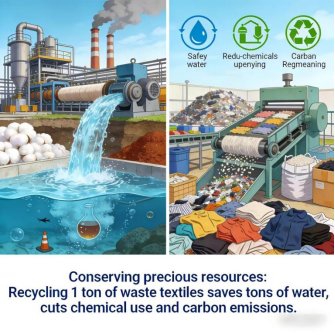
· Save precious resources: The production of new textiles (such as cotton) requires a large amount of water, land and pesticides. The production of chemical fibers requires the consumption of petroleum. Recycling one ton of used textiles can save several tons of water resources, reduce the use of chemicals and carbon emissions. This directly reduces the resource burden on the Earth.
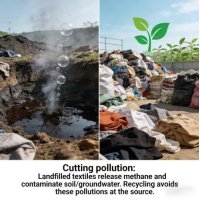
· Reduce pollution: Landfilled textiles can decompose and release methane (a potent greenhouse gas), or pollute soil and groundwater through dyes and chemicals. Recycling and reusing it avoids these pollutions from the source.
Impact on our lives: The air we breathe will be fresher, underground water resources will be protected, the cities we live in will not be surrounded by huge garbage dumps, and the entire ecological environment will be healthier.
2. Economic and product benefits: It offers more affordable and greener options
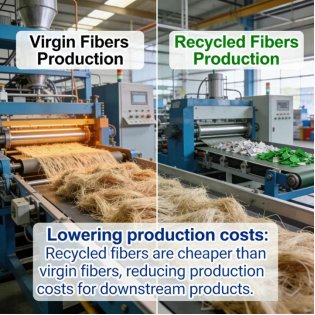
· Reduce production costs: The cost of recycled fibers is usually lower than that of virgin fibers (such as new cotton and new chemical fibers). This reduces the production costs of downstream products such as stuffed toys, heat insulation materials, and wiping cloths.
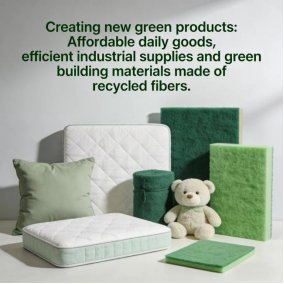
· Creating new green products: Many items in our lives benefit from this technology:
· Affordable daily necessities: The fillings in the affordable throw pillows, mattresses, and plush toys you buy are very likely made of recycled fibers.
· Efficient industrial supplies: Many of the cheap, oil-absorbent and water-absorbent cleaning cloths used in factories and repair shops come from cut fabric scraps.
· Green building materials: The soundproof wall panels or roof insulation cotton in your home might be made from used textiles. They are environmentally friendly and highly effective.
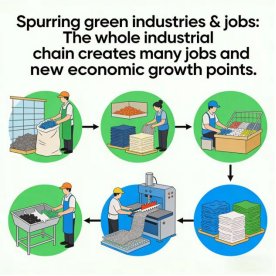
· Giving rise to green industries and employment: From recycling, sorting, cutting to deep processing, the entire industrial chain has created a large number of jobs and formed new economic growth points.
Impact on our lives: We can purchase high-quality daily necessities at lower prices, and at the same time, we have more environmentally friendly consumption options. Supporting the green industry also makes us more confident about the future economic development.
3. Social benefits: Building a sustainable future
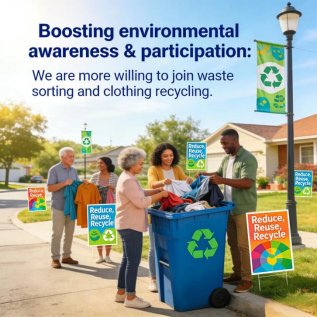
· Enhance environmental awareness and sense of participation: When we know that old clothes can be effectively "transformed" instead of being discarded, we will be more willing to participate in garbage classification and old clothes recycling, thus fostering a good social environmental protection trend.
· Ensuring resource security: Converting waste into domestic resources can reduce reliance on imported raw materials such as cotton and oil, and enhance the resilience of the national resource cycle.
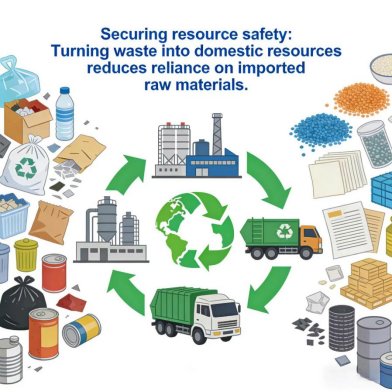
· Promoting a circular economy: This is a perfect embodiment of the concepts of a "zero-waste city" and a circular economy. It tells us that "garbage is a resource in the wrong place", encouraging the entire society to shift from the linear model of "taking - discarding" to a circular model of "resources - products - recycled resources".
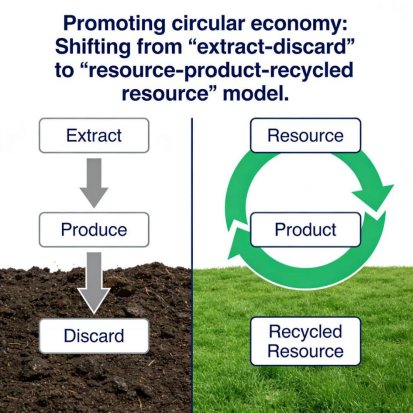
Impact on our lives: We live in a society where everyone values environmental protection and is responsible, leaving a more sustainable future for future generations. Every old piece of clothing we discard becomes a part of this virtuous cycle, which brings a great sense of achievement and hope.
Summary
Using a cutting machine to process textile waste is like a magician's key technique, which has accomplished the magical transformation from "waste" to "new raw materials". This seemingly simple technical link serves as a bridge connecting the old things we discard with our new life.
So, the next time you put old clothes in the recycling bin, you can imagine that they will be reborn through such technology and eventually return quietly in another form to improve your life.
That concludes my news sharing. I hope it is helpful to you. Choose your fiber cutting machine, and we look forward to assisting you.