


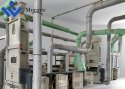
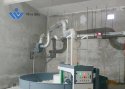
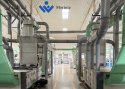
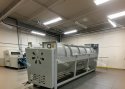
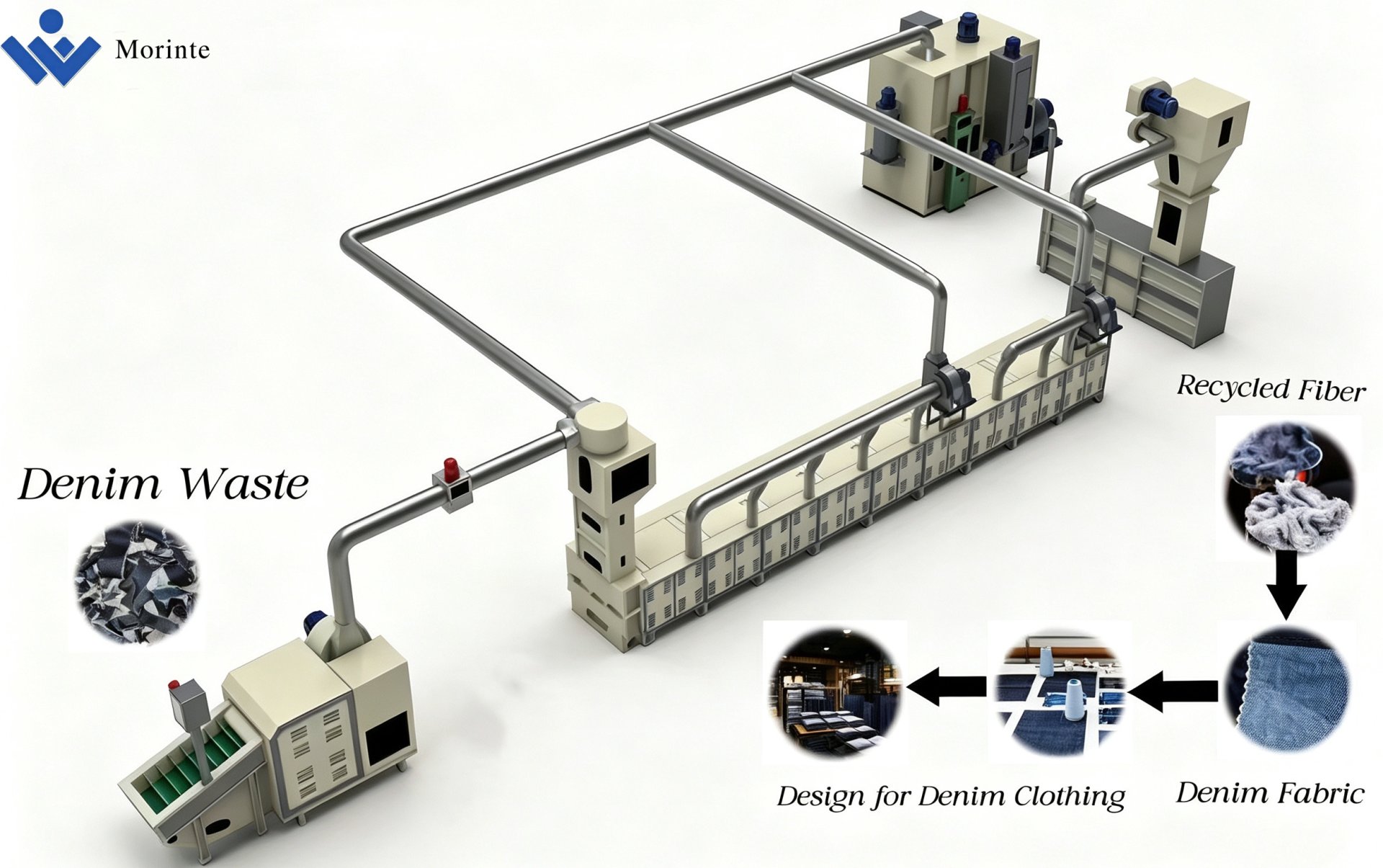
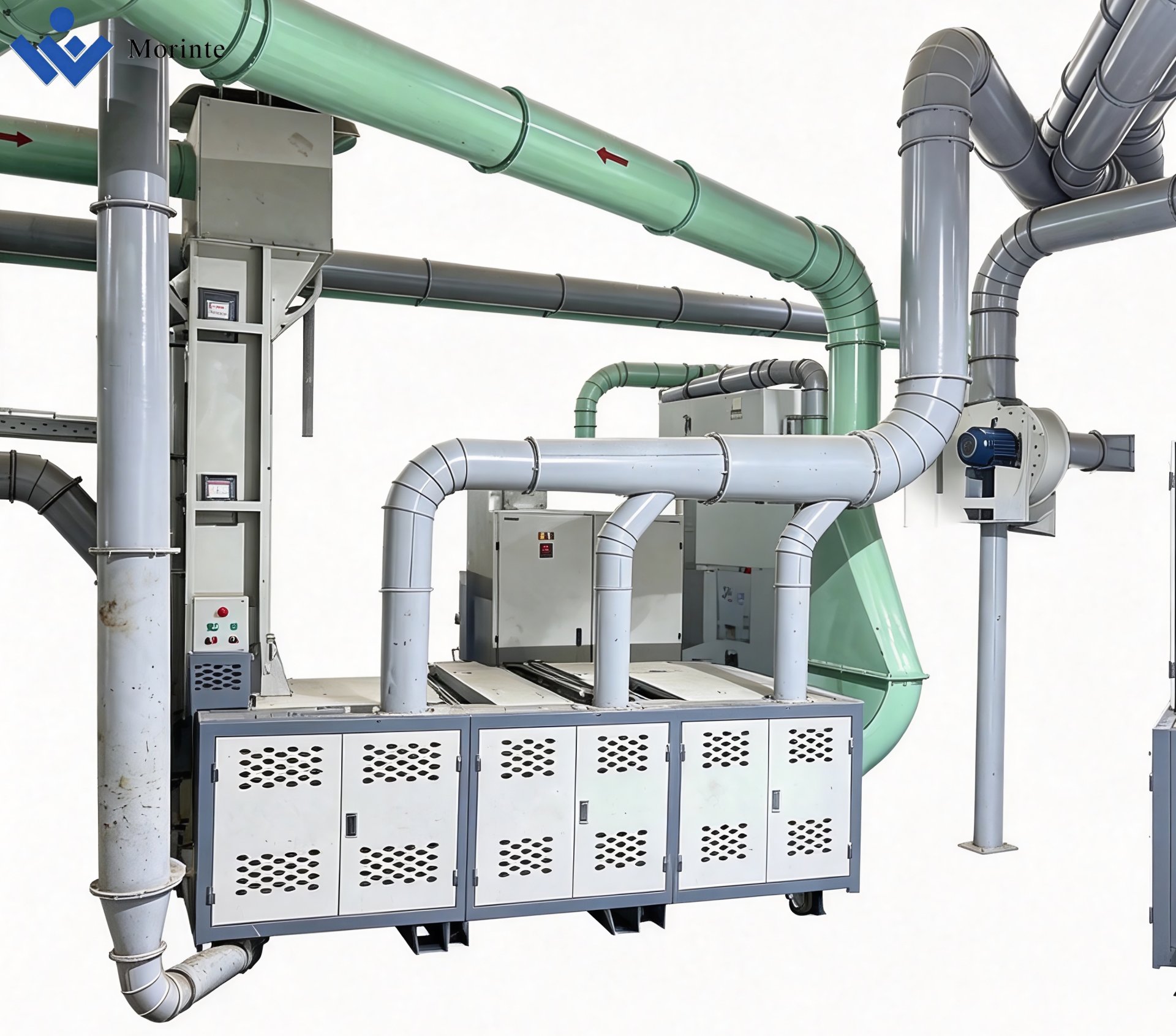
Textile waste recycling production lines use advanced technology and mature processes to efficiently convert waste textiles into high-quality recycled fiber. The output fiber is 25–30 cm in length and ready for reuse in the textile industry.Equipped with an integrated dust removal and recycling system, internal pipelines, cutting units, dust removal devices, spark detectors, and metal detectors, the lines deliver high efficiency, excellent fire resistance, and meet diverse customer requirements.
1.Textile Waste Recycling Machine production lines is equipped with advanced sorting and treatment technology, which can quickly and efficiently process various textile wastes, including cotton,
polyester, nylon and so on.
2.Textile Waste Recycling Machine production lines precision sorting system can be accurately classified according to fiber type and length to ensure the quality and stability of recycled fibers.
3.Textile Waste Recycling Machine production lines has an adjustable production capacity to adapt to the production environment of different sizes and needs.
4.Textile Waste Recycling Machine production lines is highly flexible: the whole production line is equipped with different auxiliary equipment, such as cutting off system, dust removal system,
fire protection system, etc., which can improve the production capacity and ensure the improvement of safety performance.
| Model NO. | MT600-400-250 | Delivery Time | 15-30 Days |
| Service | OEM/ODM | Color | ANY COLOR |
| Roller Dia. | 600-400-250mm | Machine Width | 1000mm 1300mm 1500mm |
| Power | 96.5kw | Wire | 9210, 5610 |
| Transport Package | Stadard Exporting Package | Specification | Set |
| Trademark | Morinte | Origin | Shandong, China |
| HS Code | 84451900 | Production Capacity | 50 Sets/Month |
| Manufacturing Technology | Laser Cutting Technology | Capacity | 200-300kg/H |
| Electrical Components | According to the customer's requiremen | Spare Parts | Wire and Cylinder |
| Voltage | 380V, Customized | After-sales Service | Onsite, Video Support |
The recycled fibers obtained after the machine processes the waste are mainly used in three directions:
1). Re-spinning: Higher quality recycled fibers are blended with virgin fibers in a certain ratio and re-spun into yarn, which can then be made into T-shirts, jeans, home textiles, etc.
2). Non woven fabric production: This is the most widely used area. Recycled fibers can be made into:
Automotive interiors: Soundproofing cotton, seat linings, trunk mats Industrial products: Geo textiles (used in road construction), filter materials, waterproofing membranes Daily necessities: Carpets, mops, industrial wipers
3). Filling materials: Shorter recycled fibers are an excellent quality filler, used for sofas, back cushions, seat cushions, dolls, insulation layers, soundproofing layers, etc.
Scenario | Waste Source | Recycling Machine Function | Final Product |
In-Plant Textile Mill Recycling | Waste cotton and broken yarn from the spinning process | On-site recycling, immediate opening and impurity removal | Remixed with new cotton for spinning, reducing raw material costs |
Garment Factory Scraps | Cotton fabric scraps from T-shirt cutting | Centralized collection, fiberization | Made into automotive soundproofing cotton or industrial wipers |
Used Clothing Recycling Plant | Discarded jeans and old sweaters from households | Removal of buttons and zippers, then fiberization | Made into recycled yarn, or directly used as filling material (e.g., cushion core) |
Non woven Fabric Mill | Textile waste purchased from other factories | Specialized processing into fiber | Continuous production of geo textiles |
1. Intelligent automation, high efficiency and energy saving: Equipped with a PLC intelligent control system, it monitors equipment operating status and other parameters in real time, reducing equipment failure rates by 30%. The entire process requires no manual intervention, significantly saving labor costs. At the same time, it adopts low-energy shredding and low-temperature regeneration technologies, reducing energy consumption by over 20% compared to traditional processes.
2. Wide adaptability and high utilization rate: It is compatible with various types of textile waste, including dry/wet, new/old, pure-spun, and blended materials, thoroughly solving the problem of traditional equipment being unable to handle high-toughness and blended fabrics. The comprehensive raw material utilization rate can reach over 98%, with no significant residual waste left behind.
3. Environmentally friendly with zero pollution emissions: The physical process generates no wastewater, waste gas, or solid waste throughout the entire operation. The chemical process uses green solvents with high recovery rates and operates at room temperature without the pollution risks associated with high temperature and high pressure. The production line is equipped with dust removal and noise reduction equipment, complies with industrial environmental emission standards, and achieves a high level of clean production.
4. Stable product quality and high added value: Fine sorting and multi-stage impurity removal processes effectively enhance the purity and uniformity of recycled fibers. Physically recycled fibers can meet the demands of conventional textile and filling applications. Chemically recycled raw materials achieve purity comparable to virgin materials, enabling their use in high-end textile production and significantly improving the economic benefits of recycling.
The delivery time is 15-30 days.
No, the machine is designed to remove dust without damaging the fiber.
It cleans soft cotton, flax, ramie, hemp, waste cotton, and chemical fibers.
Yes, we have installation and technical teams in Pakistan, Bangladesh, and worldwide.
We provide a 1-year warranty and 1-year after-sales service.
Yes, the roller material can be Casting Iron or Tube as requested.
If you have any questions or needs about the product, please fill in the following form and we will contact you as soon as possible.