


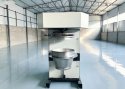
Fiber tow disc type fiber cutting machine is a specialized equipment for cutting synthetic fiber filaments into various ultra short fibers to meet the processing requirements of post-processing. The disc type flocking cutting machine is mainly used for cutting synthetic fibers such as aramid, polyester, patella, acrylic, and carbon fiber. The cutting length is determined by production requirements. The length error is less than 0.2%, and the cutting speed is 120 meters per minute.
Fiber tow disc type fiber cutting machine is a specialized equipment for cutting synthetic fiber filaments into various ultra short fibers to meet the processing requirements of post-processing. The disc type flocking cutting machine is mainly used for cutting synthetic fibers such as aramid, polyester, patella, acrylic, and carbon fiber. The cutting length is determined by production requirements. The length error is less than 0.2%, and the cutting speed is 120 meters per minute.
Model | MT350 | MT570 |
Feed speed | 50-260s/min | 60-300s/min |
Main motor | 4KW | 4KW |
Air pressure | 0.6mps | 0.6mpa |
Pressure roller | Cylinder | Cylinder |
Matersials pressing | Cyliner | Cylinder |
Machine size | 1600*1400*800 | 1700*110*1800 |
Cutting size | custmoized | customized |
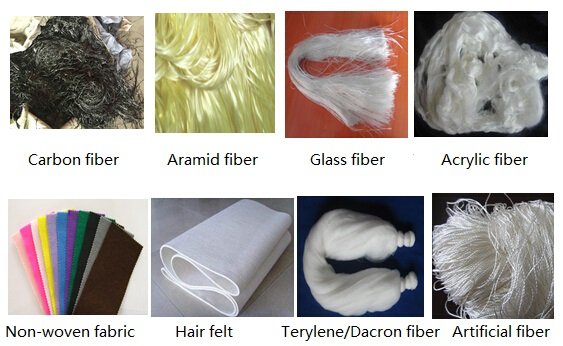
It can process a wide range of textile waste, including waste yarn, waste cotton yarn, chemical fiber filaments, nylon filaments, fabric trimmings, scrap fabrics, and garment edge trimmings. It performs well on both soft and hard materials, as well as long and short fibers.
The output size is typically between 5–20 cm, depending on the blade roller configuration and discharge screen mesh size. The size can be adjusted by changing the screen mesh or by adjusting the roller speed and the gap between the rotary and fixed blades to meet the requirements of subsequent opening or spinning processes.
The blades are made of high-strength tungsten carbide (e.g., cemented carbide) or high-carbon steel, offering high hardness and wear resistance. Under normal operating conditions, the blade service life is quite long (typically 3–6 months or more, depending on material hardness). Blades can be resharpened multiple times for reuse, reducing replacement costs.
The machine uses a shear-type cutting principle (rotary blade cooperating with a fixed blade) rather than tearing or pulling, so fiber damage is minimal. The cut fiber ends are neat, which benefits subsequent opening and spinning processes by achieving better fiber length and uniformity.
The machine is equipped with safety guards, emergency stop buttons, and overload protection devices. Some advanced models also include self-locking wheels and photoelectric sensors to ensure operator safety during high-speed operation. The feed inlet is also designed with anti-draw-in structures.
Production capacity typically ranges from 100–500 kg/h, depending on the model and material type. The machine is usually equipped with an automatic conveyor belt feeding device, eliminating the need for manual repeated feeding and significantly reducing labor intensity. The feeding speed is adjustable to suit different material characteristics.
If you have any questions or needs about the product, please fill in the following form and we will contact you as soon as possible.